Local Baltic Cuisine – 7 Flavours of West Pomerania You Should Try
Table of Contents
The Baltic Sea tastes different from what you might expect. Behind the aroma of fried fish drifting along seaside promenades lies a much richer culinary history. West Pomerania is a region of fishing traditions, smokehouses, time-honoured recipes and flavours shaped by the meeting of different cultures. From Kołobrzeg to Międzyzdroje, you can discover dishes that tell the story of the region just as fascinatingly as its historic landmarks.
What should you order during your holiday by the sea? Here are seven specialities that will introduce you to the authentic cuisine of Poland’s West Pomeranian coast.
1. Kołobrzeg Herring – A Fish with a History
Long before Kołobrzeg became a popular seaside spa resort, the sea and fishing played an important role in the lives of its inhabitants. One of the most characteristic elements of the local cuisine is herring.
Traditionally, it was prepared in many different ways: salted, marinated or served with onions, oil, spices or sour cream. Preserving fish made it possible to store it for much longer, which was especially important in the days before refrigerators.
Today, Kołobrzeg herring is a reminder of the town’s rich fishing heritage. It is particularly worth trying in its classic, simple version, served with onions and good bread.
2. Flounder – The Ultimate Taste of a Seaside Holiday
If there is one fish that many Polish people associate with holidays on the Baltic coast, it is undoubtedly flounder.
This distinctive flatfish, with its delicate white flesh, tastes best when prepared without unnecessary extras. Lightly dusted with flour, fried until golden and served with lemon, it can be surprisingly delicious in its simplicity.
Flounder occurs naturally in the Baltic Sea and has therefore long been part of the culinary traditions of coastal towns.
Tip: Before ordering, it is worth asking where the fish comes from and whether it was delivered fresh. Not every fish served at a seaside restaurant comes from local catches.
3. Szczecin Paprykarz – An Unassuming Regional Legend
Few Polish food products are as closely associated with a particular city as Paprykarz Szczeciński, a traditional fish spread from Szczecin.
Its history began in the 20th century. It was in Szczecin that a recipe was developed for canned fish mixed with rice, tomatoes and spices. Over time, this speciality became popular throughout Poland.
Although paprykarz is most commonly associated with a tin and a slice of bread, modern versions can be surprisingly varied. Regional shops offer artisanal varieties made using different species of fish.
It also makes an interesting culinary souvenir to take home from the Baltic coast.
4. Fish Soup – The Flavour of Historic Fishing Ports
In the past, fishermen knew how to make use of almost every part of their catch. Fish heads, bones and less attractive pieces were used to prepare aromatic stocks that formed the base of nourishing soups.
Today, West Pomeranian fish soups come in many varieties. Some are mild and full of vegetables and herbs. Others have a rich tomato flavour, while certain restaurants serve spicy versions.
There is no single traditional recipe shared by the entire coastline. That is exactly why it is worth comparing fish soups served in different seaside towns.
In autumn, when the Baltic coast becomes cooler, a bowl of hot fish soup tastes especially comforting.
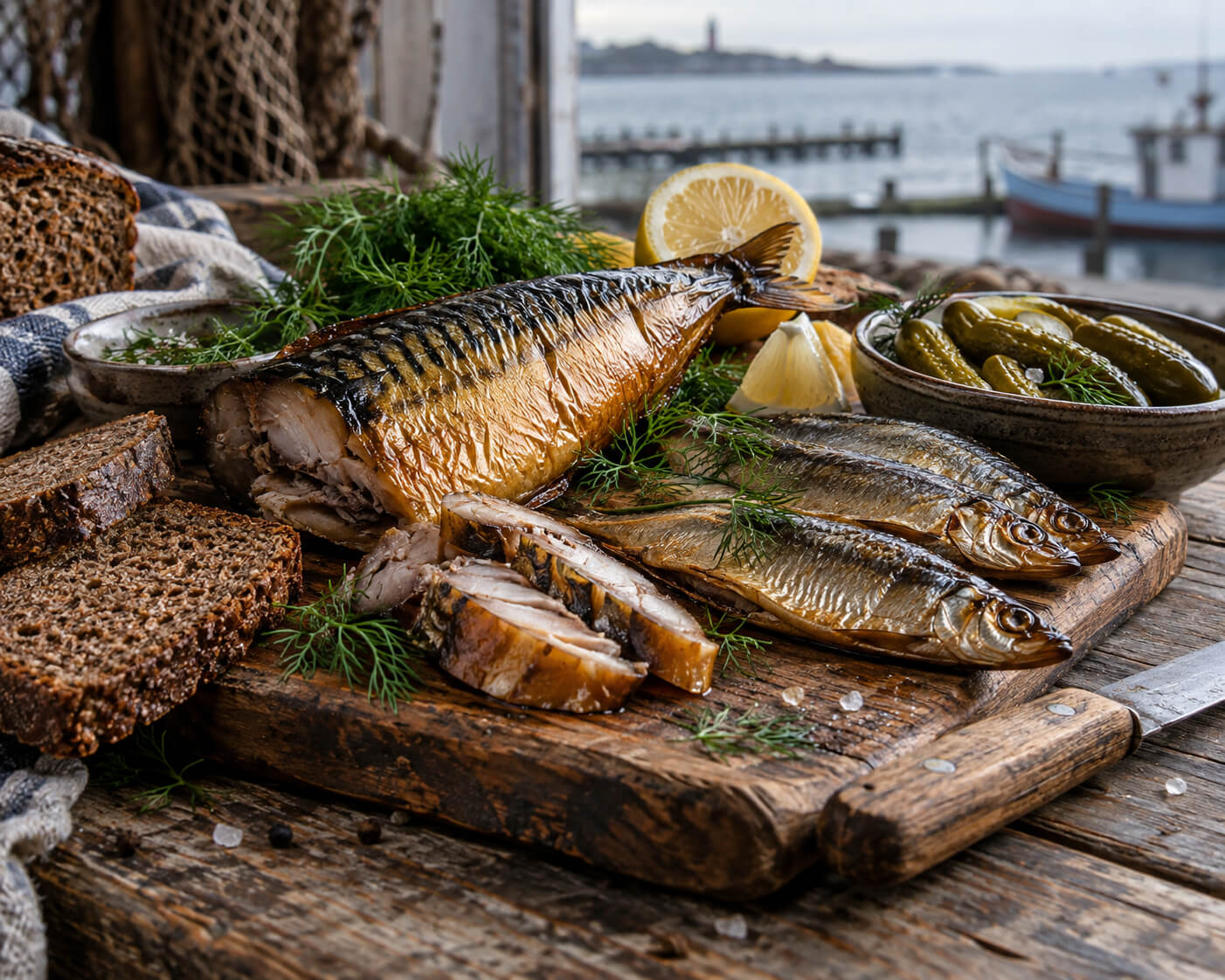
5. Smoked Fish – A Tradition Preserved in Smoke
For centuries, smoking was an important method of preserving food. Along the coast, it played a particularly significant role, allowing fishermen to keep part of their catch for later consumption.
Today, smoked herring, mackerel and eel are closely associated with seaside holidays and small traditional smokehouses.
The flavour depends on the species of fish, the salting method, the type of wood used and the smoking temperature. It is worth seeking out places where fish is still prepared using traditional methods rather than choosing only the busiest stalls along the promenade.
Freshly smoked fish, crusty bread and a view of the Baltic Sea – sometimes that really is all you need.
6. Szczecin Pasztecik – A Regional Classic Without Fish
West Pomeranian cuisine is about much more than fish. One of the region’s most recognisable specialities is Pasztecik Szczeciński.
This elongated, deep-fried pastry, typically filled with meat, mushrooms or other savoury ingredients, originated in post-war Szczecin. Its history dates back to the late 1960s.
The most traditional way to enjoy it? A hot pasztecik accompanied by a cup of red borscht, a traditional Polish beetroot soup.
Although this dish is not a typical fishermen’s meal, it has become an important part of the region’s modern culinary identity. It is definitely worth trying during a trip to Szczecin.
7. Drahim Honey – The Sweet Side of West Pomerania
To finish our culinary journey, let’s leave the coast behind for a moment and head inland, towards the areas surrounding Drawsko Pomorskie and Czaplinek.
This is where Drahim honey (Miód Drahimski), one of the region’s most distinctive traditional products, comes from.
Its name refers to the historic area of Drahim, where beekeeping traditions have long been an important part of the local heritage.
Drahim honey is a reminder that the cuisine of West Pomerania developed not only in fishing ports but also among forests, meadows and lakes.
Where to Discover Local Flavours in Kołobrzeg and Międzyzdroje
During your stay in Kołobrzeg, it is worth exploring the area around the fishing harbour, visiting local fish shops and looking for restaurants that provide information about the origin of their ingredients.
Międzyzdroje also offers opportunities to discover the traditional flavours of the Baltic coast. A good starting point is to explore small fish restaurants, seasonal seafood dishes and shops selling regional specialities.
In both seaside resorts, it is worth remembering one simple rule: just because a restaurant is located right by the sea does not automatically mean that all the fish it serves comes from the Baltic. It is always a good idea to ask about the species, origin and preparation method.
Discover the Baltic Sea with All Your Senses
West Pomeranian cuisine is far from uniform. Its modern character has been shaped by centuries-old fishing traditions as well as post-war migration, when people from different parts of Poland settled in the region.
It is precisely this diversity that makes a culinary journey along the West Pomeranian coast so fascinating.
When planning your holiday in Międzyzdroje or Kołobrzeg, make sure to leave some time in your itinerary to explore the local flavours.
And after a day filled with seaside walks, beautiful sea views and culinary discoveries, relax in one of the comfortable apartments at SeaView.pl, enjoying the unique atmosphere of the Baltic coast even after returning from a day out.
After all, the best holiday memories are created not only by the places we visit but also by the flavours that stay with us long after the journey ends.