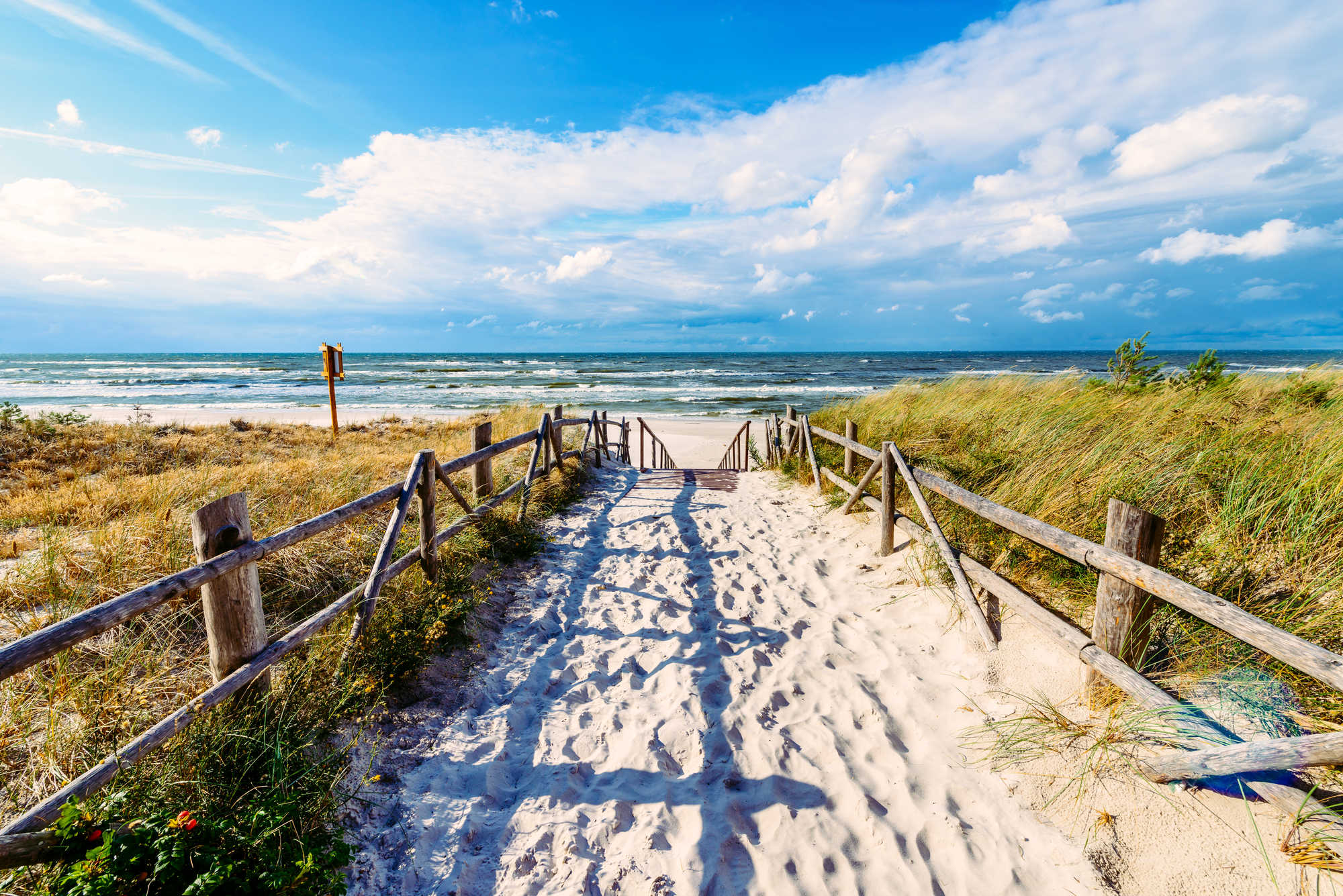
Things you didn’t know for sure about the Baltic Sea
The Baltic Sea attracts millions of tourists every year. We stroll along the beach, admire the sunsets and listen to the sound of the waves. However, the Baltic Sea harbours many secrets that most visitors know nothing about. Here are five interesting facts that might surprise you during your next trip to the seaside.
1. The Baltic Sea is one of the youngest seas in the world
Although it is hard to believe, the Baltic Sea is only about 12,000 years old. It was formed following the end of the last ice age, when vast masses of ice began to melt and fill the depressions in the landscape with water. On a geological scale, it is therefore a real ‘youngster’.
2. The Baltic Sea was not always a sea
It’s hard to believe, but a few thousand years ago the Baltic Sea looked completely different from how it does today. After the glaciers receded, it was, in turn, a vast lake, and only later did it connect with the North Sea. Scientists believe that during certain periods the water level was significantly lower, and some of the land that is now submerged was above water. It can therefore be said that the Baltic landscape as we know it today is relatively young.
4. A symbolic wedding between Poland and the sea took place in Kołobrzeg
Most people associate Poland’s ‘wedding’ to the sea with General Józef Haller in Puck in 1920. Few people realise, however, that after the Second World War a similar ceremony also took place in Kołobrzeg. On 18 March 1945, Polish soldiers symbolically ‘married’ the Baltic Sea, marking Pomerania’s return to Poland. Today, this is one of the most significant moments in the town’s history. What’s more, it is commemorated by a monument, which is quite a tourist attraction!
4. The Baltic Sea is one of the least salty seas in the world
The average salinity of the oceans is around 35‰. In the Baltic Sea, however, it is several times lower. This is precisely why many people find swimming in the Baltic Sea more comfortable than in the seas of southern Europe. The low salinity also contributes to the unique ecosystem of this body of water.
5. The most beautiful sunsets in Poland can be seen right by the Baltic Sea
It’s not just about the romantic atmosphere. By the sea, nothing blocks the horizon, so the sun literally dips into the water. Particularly spectacular sights can be seen in Kołobrzeg and Międzyzdroje on warm summer evenings.
6 Not every fish… is ‘our’ fish!
Many people are convinced that when they order fish at a seaside restaurant, they are automatically served a fresh catch from the Baltic Sea. The reality, however, is somewhat different.
Some of the fish served on the Polish coast comes from other bodies of water, and some is even imported from Norway, Iceland or the Atlantic. This is particularly true of species that do not occur naturally in the Baltic Sea or are only available seasonally.
If you want to experience the true flavours of the Baltic Sea, it’s worth looking for fish such as herring, flounder, sprat or Baltic cod on the menu. It’s also good practice to ask the restaurant staff about the origin of the fish – more and more establishments are happy to tell their guests where the fish they serve comes from.
This is precisely why the phrase ‘fresh fish by the sea’ does not always mean that the fish was caught in the Baltic Sea.
Why is it worth looking at the Baltic Sea in a different light?
The Baltic Sea is not just about beaches and summer swimming. It boasts a fascinating geological history, unique natural surroundings and extraordinary phenomena that take place right beside us every day. Next time you’re strolling along the seashore, it’s worth pausing for a moment to look at the Baltic Sea in a slightly different light.
Perhaps that’s when you’ll discover something that no guidebook has yet picked up on. You didn’t know all of this about the Baltic Sea, but after reading this article, you’re probably a bit wiser, aren’t you?